In December 2011, the European Parliament voted against the continuation of the EU-Morocco fisheries Protocol which allowed for EU fishing in the waters off occupied Western Sahara. Now, that same deal is back on the table, pending approval of the European Parliament and Council.
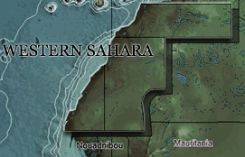
The newly proposed Protocol bears the same fundamental flaw as its predecessor; its vague geographical scope acts as an entry pass to the rich waters of Western Sahara, a territory that has been largely occupied by Morocco since 1975.
According to the EU-Morocco Fisheries Agreement, to which the Protocol sets the terms and conditions, fishing can take place in “the waters under the sovereignty or jurisdiction of the Kingdom of Morocco”. This is the core of the problem. While no state in the world recognises Morocco’s claims to Western Sahara, Morocco itself views the territory as its own. Since the Agreement fails to stipulate the southern coordinates of the fishing zones, it is left to Morocco to interpret where the European vessels can fish.
Download the newly proposed Protocol to the EU-Moroccan Fisheries Partnership Agreement here [700 Mb].Morocco still illegally occupies Western Sahara, a territory stretching from the 27º 40’ N southwards. Western Sahara’s waters contain rich fish stocks, and warnings that the EU-Moroccan agreement could be applied to waters within Western Sahara territory, were ignored. Upon signing the agreement, the EU refused to clearly demarcate the area of its application.
Download the previous Protocol to the EU-Moroccan Fisheries Partnership Agreement here [700 Mb].In 2009, after having avoided the topic for years, the European Commission finally admitted that EU flagged vessels were indeed fishing in the waters of Western Sahara. [link: ] This triggered the European Parliament’s legal services to conclude that the agreement was in violation of international law, as there was no proof that the Saharawi people had agreed to and stood to benefit from EU fishing practices in their waters.
When the previous Protocol expired in February 2011, the European Commission suggested a one-year extension of the deal. EU Commissioner for Fisheries Maria Damanaki suggested the scope of extension be limited to the waters of Morocco proper, but the proposal was dismissed as Morocco would not accept any provisions that even hinted about Western Sahara. Meanwhile an independent study on behalf of the European Commission revealed that the agreement was the worst of all ongoing bilateral agreements in terms of cost-benefit ratios, and moreover was causing further damage to already overexploited fish stocks.
The suggested 2011 extension barely made it through the Council: UK, Austria, Sweden, Finland, Denmark, Cyprus and the Netherlands did not back the proposal. The deathblow would follow in December 2011, when a majority of Europarliamentarians voted against the EU-Morocco fishing deal. This was the first time in European history that the European Parliament stopped a trade agreement. The reasons were of legal, financial and ecological concerns.
18 months later, the European Commission signed a new Protocol with Morocco, which yet again fails to specify the geographical limits for fishing activities, leaving it – yet again – to Morocco to decide where fishing can take place.
The fishing in Western Sahara is taking place in violation of international law, and clearly hindering the UN efforts to find a solution to the 30 year long occupation. The conflict is Africa’s longest-running, and is treated in the UN as an issue of decolonisation. The people of Western Sahara are either living under brutal suppression by Morocco, or in refugee camps in the Algerian desert.
Morocco is not recognised by the United Nations as the Administrative Power of this territory that it illegally controls, and is therefore not in the position to sell Western Sahara fish resources or give licences to the EU. Such an agreement further offers a sign of legitimisation to the untenable Moroccan occupation, and contributing to prolonging this conflict.
The Fish Elsewhere! campaign believes that in such a politically sensitive case, the European Union could and should have explicitly precluded Western Sahara from the agreement; indeed this was the route taken by the United States government when signing the US-Morocco Free Trade Agreement in 2004 [Download]. Similar precisions have also been made by other governments in trade agreements.
The EU maintains the agreement is perfectly legal, and chooses to look away from the clear ethical and political dilemmas of the deal. The EU bases its claims of legality on an opinion from the former UN Secretary General for Legal Affairs, ambassador Hans Corell.
The same former UN representative, however, says in a response that it would be in violation of international law to fish in Western Sahara under the current conditions, and that he does not understand how the EU can have misinterpreted his legal advice in this matter.
Not precluding Western Sahara has proven a serious mistake. It undermines the EU’s self-proclaimed neutrality vis-à-vis the conflict and is an attitude that is unworthy of a Nobel Peace Prize winner.
The FishElsewhere! campaign demands an immediate halt to the EU’s plans to sign a fisheries agreement with Morocco if it includes Western Sahara.
The EU considers to pay Morocco to fish in occupied Western Sahara. An EU-Morocco Fisheries Agreement from 2013 would be both politically controversial and in violation of international law.
The international Fish Elsewhere! campaign demands the EU to avoid such unethical operations, and go fishing somewhere else. No fishing in Western Sahara should take place until the conflict is solved.